Saturday, April 15, 2023

Rendville Coal Miner


Rendville Coal Miner
Major Fountain & Family

Lived in an 8 room double home. 4 rooms to each side. It was a rental. Rented for $5.00 each side. 


Major Fountain was 38 years old. Born in the vicinity of San Toy, Ohio. He had been a miner since 13 years of age. 


WWII Era. 1944


Preferred Citation: United Mine Workers of America, Historical Collections and Labor Archives.

Special Collections Library, University Libraries, Pennsylvania State University.

Thursday, April 13, 2023

James Karales Rendville Photos 1953-1957

 Duke University

Archive Of Documentary Arts

James Karales Photographs


Major project documents Rendville, Ohio, a coal mining town and one of the first racially integrated towns in Appalachia.


https://repository.duke.edu/dc/karales?f%5Bcommon_model_name_ssi%5D%5B%5D=Item


Rendville Distinguished Diverse History

When we talk about Appalachian people it is crucial that we keep in our minds that we are talking about a diverse population. For the Urban Appalachian Community Coalition, advocacy has always been for the many and varied populations that make up greater Cincinnati and the people who define themselves as urban Appalachians. With this in mind, we would like to share that at The Ohio State University Center for Folklore Studies presenting three short films in a program entitled “Black Appalachians: Leadership, Legacy and Village Life in Rendville, Ohio.”

Rendville, Ohio is one of the first integrated coal mining towns in southern Ohio and remains something of a monument to living history as an example of the central place of black people in Appalachia. These short films are part of the efforts to preserve the history and legacy of Rendville, Ohio by the Rendville Historic Preservation Society (RHPS), Little Cities of the Black Diamonds, and Black in Appalachia. (Links to these organizations are below).

Rendville, Ohio is located about 25 miles north of Athens, Ohio. The village was established in 1879 by the Ohio Central Coal Company. Historically, coal companies exclusively hired white men to work the mines, but the founder of the Ohio Coal Company, William Rend, hired large numbers of African Americans from the area and from further into the Appalachian regions. This led to rising tensions between black residents and workers in Rendville and neighboring white communities. The claim was that hiring black men to work the mines would drive down wages.

In 1888, mobs from nearby Corning and other areas descended upon Rendville with the intention of driving out black coal miners and their families. While no significant violence occurred, they did bring in weapons hidden in wagons. Then Governor Charles Foster dispatched the National Guard to disperse the mob. This event is still known as “the Corning War.” 

From the very beginning of Rendville, Ohio, black residents made up a sizable percentage of the population. The town flourished for a short time until over-production of coal led to a loss of jobs. At one time, Rendville was made up most of male residents. It was home to numerous bars, and a spirit of general lawlessness pervaded the town. Fights and brawls were not uncommon. Rendville experienced a resurgence during World War I, but the Great Depression put things back into decline. Since 1940, Rendville, Ohio has experienced a steady decrease in population.

Nevertheless, Rendville, Ohio remains, and the town has given us some distinguished and prominent Americans. Isaiah Tuppins was the first African American Mayor in Ohio. Sophia Mitchell was the first African American woman mayor on the State of Ohio. And Rendville native Roberta Preston was the first African American woman postmaster in the United States. Rendville, Ohio is the site of some of the most important history for black people not just in Appalachia, but also in American history. Just as importantly, this small town was one of the first places in the United States to blur the color line that divides so many people this day.


Janis Ivory, a member of the Board for the Rendville Historic Preservation Society, remembers growing up in a town that was one community. Ms. Ivory lived in Rendville from the age of ten (her mother was from Rendville) until she graduated high school in 1959. “When I first came to Rendville, I was struck by the fact that it is a place where white people and African Americans lived like one family. It is such a small town, and everyone simply lived as one community,” Ms. Ivory remembers. She recalled a time when a white minister in town became the first person to own a television. She said, “we all gathered outside her house. She would turn her tv on her porch, and everyone gathered to watch.” This was typical of the small tight-knit community of Rendville.

The crossing of the color line began in many ways with the founding of the town. William P. Rend, the founder of Rendville, hired black and white laborers to work his mines. Janis Ivory explained that “Mr. Rend paid all his workers the same no matter who they were.” Ms. Ivory also added that while Rend started a company store like many mining towns, he set it up so that it could be taken over by townspeople. Rendville is exceptional in many ways, and this appears to have begun with the town founder himself. With such a unique place in Appalachian, African American, and United States history, the presentation at Ohio State University is a rare opportunity to learn more about this little patch of Appalachian Ohio.

The Ohio State University’s Center of Folklore Studies is sponsoring the presentation at the OSU Thompson Library that will include three short, community-produced documentaries that illuminate the history and community of Rendville, Ohio. These films include “Rendville Across the Color Line,” “Stories of Decoration Day” and “Water for Life.” The films were produced in a partnership with the Rendville Historic Preservation Society (RHPS), Little Cities of the Black Diamonds, and Black in Appalachia. A Q & A and discussion will follow the screening of the films. The event is to be hosted at Thompson Library, but there is an option to participate online.

 The Urban Appalachian Community Coalition looks to these types of presentations and projects as part of the ongoing work of providing depth and richness to our understanding of Appalachian history and culture. These short films bring the history of Rendville, Ohio alive for all of us, and we hope everyone will take advantage of this event, either in person or online. Links for all of this are provided below.

Sponsored by the Center for Folklore Studies and The Ohio State University Libraries. 


https://uacvoice.org/2022/03/rendville-ohio-a-singular-portrait-of-a-small-appalachian-town-by-mike-templeton/


Learning From the Past: The Story of Rendville Ohio

 Southeastern Ohio is known for its rolling hills, scenic views and its rich Appalachian history. Small villages nestled in the valleys of Athens, Perry and Hocking counties make up “Little Cities of Black Diamonds,” former coal mining towns that brought workers from near and far to achieve the common goals of landing a job and making money.

Sitting about 25 miles north of Athens is the small coal mining town of Rendville. The town is so small, it’s easy to miss — the only indication of its main street is a historical marker. A small white church stands at the end of the street. Some of the houses there are now vacant, their owners either passed on or moved away with no family interested in moving back in.

City hall, a two-story white building at the other end of the street, shows its age. Chipped paint flakes from the exterior and the only sounds that can be heard in the afternoons is the American flag flapping in the wind.

But you shouldn’t be fooled by the near silence here. Rendville’s contribution to this region, and to equality, speaks loudly and clearly for anyone who takes the time to read that historical marker.

This village, established in 1879 by William P. Rend, was the first integrated village in the state of Ohio.

It was all about the sense of community and ethnic diversity that moved the town of Rendville forward. It was progressive for its time.

Everyone in the town looked out for everyone else, and on the backs of those who lived in the village came people like Isaiah Tuppins, Roberta Preston and Adam Clayton Powell Sr., notable figures that went on to make an impact.

Isaiah Tuppins, the first mayor of Rendville, was African American. He was also the first African American man to earn his medical degree in Ohio at the Columbus Medical College which is now The Ohio State University. Tuppins was critical in protecting the rights of the African American majority in Rendville.

Rendville stood apart from the other coal mining towns in the area, who often had white minors who disapproved of William Rend’s hiring of immigrants from Europe and African Americans.

Roberta Preston was the first African American to serve as postmistress in Ohio and the United States. Adam Clayton Powell Sr., the pastor who developed the Abyssinian Baptist Church in Harlem, also has roots in Rendville.

“It’s just amazing to see what the people that came through Rendville accomplished,” Jackson said. “When I look back on it now and think about the people who lived there … it just gives you a feeling of being proud that you are from Rendville.”

While Rendville’s history runs deep, some of the residents have been trying to preserve the memory of the important historical figures who came through Rendville.

Former residents, including Ohio University Hall of Famer Jerry Jackson, got together to form the Rendville Historic Preservation Society. Their goal? To leave a legacy for future generations through the preservation of the history, heritage, and the physical structures of the Village of Rendville.

As president of the RHPS, Jackson wants the younger generation to hear about what he experienced growing up in Rendville in the 1950s.

“It was a quiet little town,” he said. “When I was growing up the streets were dirt, so we did a lot of playing in the streets – [we played a lot of] basketball or football.”

When asked about the current political climate and divisiveness in our country today, Jackson pointed to Rendville as an example – the story of the small village in the middle of nowhere, with a reported population of 34, had an impact unlike any other at the time.

“It’s very divisive now, but it was amazing to see how a small village like Rendville got along earlier in the 19th century,” he said. “Growing up there was never any racial tension or anything like that.”

“It was an integrated, coal mining town … there were a lot of immigrants from different countries. There didn’t seem to be any problems there in Rendville … they were there to work and that’s what they did. They worked with each other, and everybody got along just fine,” Jackson said.

With racial tensions being the highest they’ve been in the United States, it’s almost as if we’re moving backward. Rendville, as far back as 1879, was an example of a community that looked out for one another. The people of Rendville all had the same goals – they worked together regardless of race.

It’s instances like these, moments in history, where we can learn from the past in order to avoid repeating what has already occurred. Rendville can be used as an example for what could be if we all got along and treated each other with respect.

“The goal then was to work in the coal mines. That’s what they came there for and that’s what they did,” he said. “They lived together, they worked together, they went to church together … the goal financially was just to make money and work. People got along there in Rendville just by living together and trusting each other.”


YouTube Jerry Jackson Interview

https://youtu.be/lyFDFM7VHpc


https://woub.org/2018/11/15/learning-from-the-past-the-story-of-rendville-ohio/


Wednesday, April 12, 2023

Rendville We All Grew Up Here Together!


 The founder of Rendville, William P. Rend, was willing to hire many black Americans when no one else would.  To those who know it, the town is now known for tackling the age-old issue of racism that has plagued this country for so long.  But for those who lived there, integration was not a new concept. 

Jerry Jackson, a resident of Rendville, is serving as the chair for the Rendville Historic Preservation Society in order to preserve the history of the town he loves.  Jackson is an Ohio University alumnus who had a career in basketball and even served in a Vietnam War.  When he looks back on his experience in Rendville, he realized that race was not a big part of it. 

“I never heard anything about race relations growing up or staying away from white folks or anything like that,” Jackson says. “But I mean, we all grew up here together. It was probably half black and half white. Everyone was here for the same purpose: to work in the coal mine. So, we got along just fine.” 

Janis Ivory, who grew up with Jackson, is also serving as a member of the Rendville Historic Preservation.  She recalls a very similar experience to that of her co-chair. 

“We began to see on those old, early, fuzzy TVs and get articles in the newspaper that there was all this stuff going down South with the Civil Rights Movement,” Ivory says. “I thought, ‘What is the big issue?’ … I really had to ask and look into it to understand that Rendville is a paradise socially compared to what other people were going through.” 

Jackson and Ivory, now as adults, understand how significant the town is not only to the state of Ohio, but to the nation as a whole.  Despite the significance of the town, community members are struggling to maintain the existence of Rendville.  With the diminishing job market, residents are leaving the town at an expedited rate. 

“A lot of the people aren’t here anymore … they passed away.  A lot of their children … obviously, are not going to stay here,” Ivory says.  “You go where the jobs are … quite a lot of them went to Columbus and different places.” 

Instead of seeing this as a barrier, those who remain in the community are using the diminishing population as motivation to continue their preservation efforts in Rendville. 

“My generation, we had good memories,” Ivory says.  “We had a desire that if we could just reach back, I’m sure we would have been glad to preserve what had been left behind.” 

https://southeastohiomagazine.com/2020/09/21/gold-mine-sparks-racial-integration/

Rendville Racial Integration Model 1880-1900


Rendville, Ohio, was an anomaly in time and place. This small Appalachian coal mining town was a model of successful integration during the post-Reconstruction era, a period in which race relations were at their lowest. Located in the majority white northern coalfields, 

Rendville's unusual demographic profile, a mixed population of African Americans, native whites, and foreign-born immigrants, was the product of distinctive historical settlement processes. Employing historical records, this thesis argues that Rendville's distinctive character was the result of a variety of factors including the efforts of a progressive coal operator, William P. Rend, whose hiring practices and equal pay policies offered economic security for African Americans. 

This thesis argues that African Americans in Rendville were agents of their own social change during the nineteenth century. By utilizing a network of social organizations and an interracial labor union, they established the framework for a successful African-American community.

https://etd.ohiolink.edu/apexprod/rws_olink/r/1501/10?clear=10&p10_accession_num=ohiou1307303263


Thursday, June 16, 2022

Rendville, Ohio

 With a population of about 1,000 people at its height during the boom years of the 1880s, Rendville was home to black miners who lived and worked alongside white immigrant miners who were newly arrived from central and eastern Europe.


The town was named for William P. Rend, a Chicago industrialist who operated a coal mine here and paid black and white miners the same wages. The town was filled with saloons and gambling, and stores and churches. It hosted a big Emancipation Day celebration every year to commemorate President Abraham Lincoln’s ending of slavery in the South.

Adam Clayton Powell Sr. was a hard-living miner here in the 19th century before he surrendered his vices and was “saved” at a religious revival at the local First Baptist Church. He later became pastor of Abyssinian Baptist Church in New York City’s Harlem neighborhood and a civil-rights leader.

Richard L. Davis, another black coal miner, was an organized-labor leader in the Knights of Labor and then the United Mine Workers of America in the late 1800s. He worked to make sure that black miners had the same opportunities as white miners. He is buried in Rendville Cemetery.

In 1879, the Ohio Central Coal Company established Rendville, Ohio. Traditionally, white miners had refused to allow companies to hire African American miners. William P. Rend, the founder of Rendville and owner of a mine in this community, hired large numbers of African Americans as well as Europeans. White miners in surrounding communities, especially in Corning, Ohio, feared that African American miners would drive down wages. 

To prevent the continued use of African American miners, in 1880 white miners in Corning and neighboring communities descended upon Rendville, apparently hoping to drive the African Americans from the community. In an attempt to mask their true intentions, the white miners smuggled firearms into the community in wagons, with the guns concealed under hay. According to newspaper accounts no significant violence occurred, although Ohio Governor Charles Foster did dispatch the Ohio National Guard to disperse the mob. In a small skirmish, three or four protesters were injured. This event became known as “the Corning War.” 

Tensions between the white and African American miners continued. In 1888, a mob of Corning whites prepared to descend on Rendville, following the murder of a white Corning man presumably by an African American man from Rendville. Rendville’s mayor, Isaiah Tuppins, the first African American man to serve as a mayor of an Ohio community, convinced Corning law enforcement officials to disperse the mob and to protect the accused man.

Perry County Cultural Arts and Historical Society


Wednesday, June 9, 2021

 Archibald IRWIN was born in 1734 in Glencoe, Antrim, Ulster, Northern Ireland. He was an ensign in the French and Indian War in 1756. He was a major in the Continental Army. He died of Palsy on 23 Jan 1798 in Mercersburg, Franklin, Pennsylvania. He was buried after 23 Jan 1798 at Church Hill Cemetery, Pennsylvania. 


Ensign under Capt John Steel 1756 in the French and Indian War. Father also listed as James Irwin the Pioneer of Cumberland Co. of "Irwinton Mills" on the West Conococheague. Mentioned in brother James Irwin's will 1784. 

James Irwin, born in 1700, was a Scotch-Irish immigrant who came to Pennsylvania in 1729 with seven other Irwins. The Irwins operated mills, a bleaching plant and a smith shop in Northern Ireland. James Irwin in 1748 owned 540 acres in Peters Twp. just north of present day Mercersburg, Pennsylvania. By 1766 he owned a mill valued at three pounds 12 shillings and by 1769 the value of the mill was 10 pounds six shillings. 

During the Revolutionary War, Archibald Irwin's oldest son, James, began to do commissary duty for the Western Army at Irwinton's Mills. James Irwin organized pack horse trains to carry flour, meat and other provisions to Pittsburgh for the Western Army. James Irwin acted as an assistant commissary under the appointment of Col. George Morgan, who was Commissary General for the Western Army, whose headquarters were at Pittsburgh. 

Large quantities of flour were made at Irwinton's Mill, packed in kegs, each weighing about one hundred pounds, to be sent west. Flour was brought in from Washington County, Maryland. Large numbers of beef cattle were driven to Irwinton's plantation to be purchased, slaughtered and processed in a recently erected slaughter house, and sent to the Western Armies. James Irwin stated that the Pittsburgh Quarter Master Department had four brigades of pack horses each containing about one hundred horses, with one horse master and twelve riders to each brigade, to carry provisions west for the Army. The mill must have been busy and crowded, with one hundred pack horses being loaded, and with their drivers and horse master preparing for a trip over the mountains to Pittsburgh. 

Archibald Irwin died in 1798 and the plantation was given to his youngest son, Archibald Irwin II. Archibald Irwin’s oldest daughter, Jane, married William Henry Harrison, Jr., son of the General and President William Henry Harrison, at Irwinton Mills in 1824. Jane Irwin Harrison was mistress of the White House during the brief administration of the first President Harrison in 1841. Archibald Irwin IPs daughter, Elizabeth, married John Scott Harrison. In 1889 Benjamin Harrison, the oldest son of Elizabeth Irwin Harrison, became President of the United States. 

From the Book: "The Ancestry of Benjamin Harrison" 

Archibald Irwin, the great-great-grandfather of President Benjamin Harrison, appears to have been born in that country. Mrs. Newcomer of Indianapolis, among other information kindly furnished me, tells me that this Archibald settled where his son and grandson of the same name afterwards resided, four miles south of the site of Mercersburg, Franklin County, Pa. This was formerly in Peters Township, Cumberland County, and a list of owners of land in that Township in 1763 mentions an Archibald Irwin with two hundred acres, for which the warrants had already been issued, twenty acres being cleared, and nine sown, and with two horses and two cows. John, James, William, and another John appear in the same list, each having more acres cleared than Archibald. It is probable that this first Archibald, rather than his son,  the Ensign Archibald Irwin of the Rev. John Steel's company of Armstrong's battalion in 1756.

Thursday, July 6, 2017

Blue Smoke Slag Heap Rendville Ohio

I found Rendville Ohio quite beautiful.  My father was quick to object but that is how I saw it.
On winter nights the piled high coal slag burned blue bright like a lava lamp and I loved the sight of it. It was my beacon and became my memory.
I inhaled the sulfur scent and today never tire of the odor of a match strike. It takes me back.

The relatives drove me places. Into leaning coal camp homes, clinging to eroding hillsides.
Like a griot in training, I met old Italian woman who cooked their chickens head down in enormous pots with feet exposed and steamy.
Black grandmothers unearthed photos and official testimonies that celebrated freely elected Black mayors, union organizers and co-op founders. It was quite a treasure trove.
But my father ran from it. So much poverty and so much racial prejudice.

A great grandfather stood with UMWA Richard Davis and shouted at his fellow miners not to side with company men who created racial divisions just to increase profit. I felt their presence along the worn out, rutted muddy strets of Rendville where only a dark-timbered pool hall remained.
Here we could buy orange soda and drop nickles into a beat up juke box.

Famed photographer, James Karales, saw what I saw and about at the same moment in time.  He used a camera to record images of how it was at the end of its career as a vibrant human center.


Wednesday, March 25, 2015

Irvine Home Glencoe County Antrim Northern Ireland


After our brave ancestors were run out of Drum Castle Aberdeenshire, Scotland by the Edward I Longshanks type tyranny, they settled in Glencoe County Antrim Northern Ireland.  This is an actual photo of one of the Irvine homes from the book, Irvines and Their Kin.  Please get a free, online copy of this book and read it!  Quite an eye opener.

Tuesday, March 17, 2015

Irwins In Berlin X Roads and Camba


By 1882 both John and Hannah had moved on to their heavenly reward, with deaths in 1867 and 1868, and burial in Keenan Cemetery, outside Wellston, Ohio.
But this is a good map, showing the lay of the land.  Camba is on this map and was a place also known as Irwin's Station and Irwins Station.  Find Camba just above the blue area labeled "Sheridan Coal Works".  Since it was known as Irwin's Station, I am ASSUMING that it was the old family location at one point in time.  Railroad, Store, Post Office.
Latitude: 38.9647965 Longitude: -82.6051634

Friday, March 6, 2015

Back To Generational Patterns In Irwin Ancestry


I remember my father, Pat Irwin, always saying that his father, Joe Irwin, was a mechanical genius and could design or repair absolutely anything.  Joe intuitively understood the mechanics of things and Pat must have inherited that gene because he was much the same.

Above is a photo of Rendville, Ohio after the coal boom had gone bust. Not exactly a community bursting with the promise of economic advancement.  So, while my grandfather Joseph had the know-how to invent, restore and re-purpose devices of all description, he really did not get much Career Opportunity to do so.

The very contraptions used for intensive deep mining fell into disrepair since everything below ground was drilled out by the late 1920's. So, when a railroad job became available upon return from WWI Argonne Forest duty, he stayed with that job until he died on that job in the 1940's.
But of course, a down-on-its-luck coal camp is also exactly the circumstance that would make Joe Irwin the most popular fellow in town.  Just about any man or woman who knew how to patch, plaster or piece life back together was a sought after citizen.  Can you help me rebuild the engine on this 4 cylinder Henderson motorcycle?  If you could answer in the affirmative, you must have been worth your weight in gold.

I always wondered where the historical mechanical intelligence originated. How was it passed down and where did these Irwins get the opportunity to absorb such problem-solving in application?
Well, along came the Genealogy with this explanation.  Please Read Below!

James Irwin, born Glencoe County Antrim in 1700, was a Scotch-Irish immigrant who came to Pennsylvania in 1729 with seven other Irwins. Those Irwins operated mills, a bleaching plant and a smith shop in Northern Ireland. 

James Irwin in 1748 owned 540 acres in Peters Twp. just north of present day Mercersburg, Pennsylvania. By 1766 he owned a mill valued at three pounds 12 shillings and by 1769 the value of the mill was 10 pounds six shillings.

During the Revolutionary War, Archibald Irwin's oldest son, also named James, began to do commissary duty for the Western Army at Irwinton's Mills.  James Irwin organized pack horse trains to carry flour, meat and other provisions to Pittsburgh for the Western Army. James Irwin acted as an assistant commissary under the appointment of Col. George Morgan, who was Commissary General for the Western Army, whose headquarters were at Pittsburgh.

Large quantities of flour were made at Irwinton's Mill, packed in kegs, each weighing about one hundred pounds, to be sent west. Flour was brought in from Washington County, Maryland. Large numbers of beef cattle were driven to Irwinton's plantation to be purchased, slaughtered and processed in a recently erected slaughter house, and sent to the Western Armies. 

James Irwin stated that the Pittsburgh Quarter Master Department had four brigades of pack horses each containing about one hundred horses, with one horse master and twelve riders to each brigade, to carry provisions west for the Army. The mill must have been busy and crowded, with one hundred pack horses being loaded, and with their drivers and horse master preparing for a trip over the mountains to Pittsburgh.

The original Irwinton Grist Mill, built around 1760, had over 25 belts running, 10 belt elevators, water turbines, a variety of 15 pieces of equipment, rope hoist, wooden cogs, hydro electric was produced while lots of pulleys and shafts kept turning.  Sounds like a wonderful and complex Rube Goldberg universe to grow up in.

We also get the picture of a very PRACTICAL patriotism.  This family helped launch and liberate a fledgling democracy by putting bread in its belly, blankets on its bed, boots on its feet, meat on its table, shirts on its back and powder in its musket.  They helped make the physiological struggle for Independence a reliable possibility.

And so we begin to comprehend how invention and innovation is a precious Inheritance, manifesting in an abandoned coal camp, where it is devalued by a morally bankrupt industry but fully utilized and appreciated by those left behind, now depending on it for their very survival.  And so it persists, one generation after another and in 2016, perhaps it is one of the gifts that you've discovered inside you and yours.

Thursday, December 4, 2014

Irwin Gravesites Spring Grove Cemetery Cincinnati, Ohio


Pictured here are the Irwin Graves and below, the Gravestone for Archibald Irwin.
You may visit these in the historic Spring Grove Cemetery.  You SHOULD go visit.
Images courtesy of Bonnie Speeg

Along The Ohio River Front in Cincinnati, Ohio we find the reminder of what was once a thriving business in a pioneer city, founded by John Irwin's father William and brother Archibald.

There is a short alleyway just yards from where the Fosters, Irwins, Findlays and others, worked and resided.  The street sign is posted here and currently in the possession of Bonnie Speeg.
Perhaps a rededication will one day return it to its role as historic navigator.


John's brother, Archibald, is memorialized in his Obituary below.
Courtesy of Bonnie Speeg


And here is the Obituary for John Irwin, brother of Archibald Irwin, Esq.  John died in Berlin Crossroads, Ohio which was a famous station on the Underground Railroad and first settled by the descendants of Thomas Jefferson and Sally Hemmings.  John's wife, Hannah Combs Irwin, died the year after.  Berlin Crossroads, Ohio is re-discovering its own history and have started their own Facebook page which is full of rich history.  They can be found on Facebook as Berlin X Roads.


Berlin Crossroads Ohio where John and Hannah Combs lived in 1850.


Wednesday, October 22, 2014

Irwin & Foster Steam-Powered Packet Boat Firm Takes A Trip To Texas


Remember that this is a multiple page Irwin Family chronology, so be sure to click through everything for all the history postings.  Archive List appears on the right.

John Irwin, the 3rd grandfather of Patrick Burns Irwin, left a family in Cincinnati for a move to Appalachia Ohio, after the 1824 death of his father William Irwin.  The Cincinnati relatives were merchants, founders and boosters of the growing city and employed in the business of moving people and product up and down the big rivers of the USA.  The Irwin family assets were hammered by the infamous Panic of 1819.  Google it for more information but know that Cincinnati was one of the hardest hit cities in the young USA.  Things began to improve in 1822 but John Irwin may have seen greener pasture far removed from city life.  Or maybe Cincinnati was such a bankrupt mess that it was time for John to get out while the getting was good.

This is a photo of a classic, steam-powered packet boat.  It carried people, cattle, bales of cotton from southern plantations, produce of every description and machinery required in the settlement of western lands.  This is how the Irwin's made their living.  It was risky.  There was a lot of competition, it all turned on the unlawful institution of slavery and the boats frequently caught fire and sank.

Irwin & Foster Firm was located at #4 Cassilly Row, otherwise known as Old Rat Row.  This was the rough and tough waterfront district of Cincinnati.  John's brother Archibald was in business with Dunning Foster.  Dunning was the brother of American Composer, Stephen Foster and the young Foster worked for the Irwin & Foster firm as a bookkeeper on the riverboats.
The famous song, Oh Susanna, was written during Foster's bookkeeping days with the Irwins.

So, the Foster family packed the artist Stephen off for Cincinnati.
The prospect there seemed a good one. He was to enter the office of his older brother, Dunning McNair Foster, who was in partner­ship with Archibald Irwin, Jr.
Dunning had engaged a room for Stephen in the boarding house where he now lived. 
This was the home of Mrs. Jane Griffin, a widow who was a communicant of St. Paul's Church; a circumstance which, as the Fosters were devout Episcopalians, doubtless pleased Mrs. Foster much better than Dunning's earlier quarters at the Broadway Hotel. The boarding house was on tree-shaded Fourth Street, in a good neighborhood and within easy walking distance of the Irwin & Foster office.

The sign Stephen saw as he stood before the door at No. 4 Cassilly's Row, East Front Street, near the wharf, read IRWIN & FOS­TER, AGENTS. 
They were designated as commission and forwarding merchants and steamboat agents. Stephen soon learned pre­cisely what that title meant. 
It meant com­petition with the half dozen firms in Cassilly's Row and other office buildings along the river front for freight and passenger business.
Each firm represented several steamboat companies
Irwin & Foster Agents today, is the present site of the Guilford Public School, Fourth Street between Broadway and Ludlow, and near the University Club.

This is a story about our Cincinnati Irwin's in business with the family of Stephen A. Foster, the songwriter of "Beautiful Dreamer" and other old hit tunes.

In soliciting the trade of local manufacturers and merchants and the patronage of the trave­ling public, the young partners—they were still in their twenties—had made a good start. Dunning Foster, after several years as a clerk on an Ohio River steamboat, had brought river experience as well as good looks and affability to his work as a solicitor. The energy and stability of Irwin & Foster, however, were supplied by Archibald Irwin, Jr. 

"Archibald Irwin, Esq." had come from Pennsylvania in the early 1820's and had won success as a commission merchant.  He was treasurer of the Little Miami Railroad Company which did not achieve legal incorporation until 1836.  

Archibald, Jr., displayed the Scotch Presbyterian qualities of his father and of their relatives, prominent in industry and in law. 
He saw to it that Irwin & Foster sailings always had top place in the steam­boat advertisements in the newspapers. He was a vigorous figure in the movement of the river men in the fall of 1848 to support General Zachary Taylor for the Presidency.
When the new clerk and bookkeeper turned to the steamboat advertisements in the local newspapers he found that of nineteen announcements, Irwin & Foster ranked second in number only to Rogers & Sherlock among the local steamboat agents. 
Right at the top of the column were five separate notices that Irwin & Foster boats were sailing for Pitts­burgh, St. Louis and points on the Arkansas.River. 
Later the list expanded to include Louisville, Nashville, Memphis and far-off New Orleans. There must have been fascina­tion for Stephen in these destinations and in the picturesque names of boats which he entered on the bookkeeping ledgers: Northern Light, Taglioni, Chalmetto, Talisman, Ohio Belle, Planet, Gladiator, Schuylkill, South Amer­ica, Bolivar, Germantown, Clipper, Messenger, Hibernia, Mary Stevens, Declaration, and Tele­graph.

The Telegraph—bound for the Southland! A melody had been bubbling in Stephen's brain which called itself "Oh! Susanna." So he had the Black narrator of the song shout "I jumped aboard de Telegraph." 

On certain spring mornings as he looked down the olive-green river from the office windows, Stephen Foster would doubtless have liked to jump aboard too.
Then Archibald Irwin or Dunning would hand him bills of lading, mute reminders that passenger travel was only one part of this business and of life. He would neatly write on the books the shipments for Pittsburgh on the daily packet service: "10 hhds Sugar, 13 feacks Wool, 10 tons Sundries"; "13 brls 'Potatoes, 2.5 do Whisky, ao tons Sundries"; '"100 brls Lime, 5 do Alcohol, 1 do Oil, 6 tons Sundries"; and "120 brls Whisky, 18 do Lard Oil, 7 hhds Bees Wax."

Bonnie Speeg is the owner-keeper of a journal, hand-written in 1843 by one of the Irwins, and she has been kind enough to share some of the history of the neighborhood with us.  
"The Steamboat Commissioner, Archibald Irwin (Irwin & Whiteman), resided on the site of what is now Guilford School, from 1820 to1850; he was the employer of Stephen Foster.
Without the job procured by his brother to work at Irwin & Foster, "Oh Susannah" could not be claimed to have been written in our city.
The Irwin family is part of the Stephen Foster biography by Ken Emerson titled "Doo-Dah!" (1998) 
Irwin's sister Jane Findlay lived around the corner on Broadway and Arch Street. (presently the police station). 
Jane's niece, Jane Findlay, married William H. Harrison II and escorted her father-in-law to Washington, D.C. when he was inaugurated.
Jane Harrison returned to Cincinnati and interacted between the Irwins and Findlays often between Arch Street and Lytle and Fourth.
Irwin and his daughter walked with John Quincy Adams to Mt. Adams, in 1843, for the laying of the Observatory Cornerstone.
Archibald Irwin became Railroad Director (prior to Strader) in 1850..he lived on Arch Street."


These boats hauled freight where the going rate was $0.05 per 100 pounds for long journeys and $0.25 per 100 pounds for short trips.  They did a lot of commerce with the southern plantation owners and therefore, abolition of slavery was a hotly contested issue within the city of Cincinnati and abolitionist politics were often considered "bad for business".  John's wife, Hannah, was a woman of color so she was probably considered "bad for business" as well.

John Irwin's tombstone records that he and his first cousin James Irwin rode one of these boats south to fight in the Mexican American War.  James died in Mexico and John returned to his family, who then lived in Lawrence County Ohio.  A new baby William was born to Hannah while John was away at war.  What an adventure!  And by coincidence, Texas was a stop on their journey to Mexico.  Camp Irwin was named for the fallen cousin James Irwin.

CAMP IRWIN. Camp Irwin, also called Camp Placedo, was a Mexican War encampment established in October 1846 on Placedo Creek near the Port Lavaca-Victoria Road, twelve miles west of Port Lavaca in Victoria County Texas. 
It was named for James R. Irwin, Chief Quartermaster of Winfield Scott's army during the Mexico City campaign, and it served as a rendezvous for troops assigned to Gen. John E. Wool's Center Division and as a temporary military supply depot

Birth: James Irwin born Dec. 1, 1800
Franklin County
Pennsylvania, USA
Death: Jan. 10, 1847
Distrito Federal, Mexico

United States Military Officer. He was born in Franklin County, Pennsylvania and was the son of Archibald and Mary Irwin. He served in the US Army as an Assistant Quarter-Master General. He died from pneumonia in 1847 in Mexico City during the Mexican-American War. His grave was removed to Spring Grove on July 30, 1858.  Spring Grove Cemetery and Arboretum is the historic burial grounds for the Cincinnati Irwin's.

A bit more about James Ramsey Irwin


Tuesday, October 21, 2014

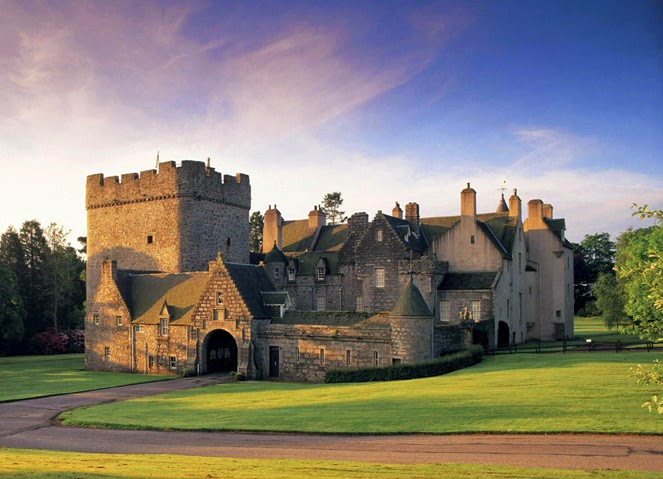
Drum Castle


Take The Virtual Inside And Outside Tour Of Drum Castle.  Paste this address in your browser and you should be good to go.  Your ancestral home is now a museum and can be toured during the warm months of the year.  Head to Aberdeen and have a look-see.

http://www.nts.org.uk/Learn/virtual_drumcastle.php

Monday, October 20, 2014

Archibald Irwin House Mercersburg, Pennsylvania


Archibald Irwin House Mercersburg PA is where John's father William Irwin was born. Archibald died in Mercersburg Franklin County Pennsylvania on January 23, 1798. 

William Irwin was born 1766 Mercersburg PA and died July 16 1824 Cincinnati Ohio. He is buried in the historic Spring Grove Cemetery and Arboretum and was husband to Mary "Polly" Smith and father to John Irwin born 1801 in Mercersburg.

This building belonged to and was built by Archibald Irwin, the son of James Irwin. Archibald was also known as Ensign Archibald Irwin of the Reverend John Steele's Company of Armstrong's Battalion in 1756 during the French and Indian War.

They had a place that became known as "Irwinton Mills" out on the West Branch of the Conococheague. 
Today the same place is known as "Anderson Mill." 

A log house there that still stands and is in good condition, and was built in 1732. A wonderful stone house was completed around 1768. This Irwin family was connected with both Presidents Harrisons. 


James Irwin, Archibald's father was born @ 1700,  and was a Scotch-Irish immigrant who came to Pennsylvania in 1729 with seven other Irwins from the Glencoe County Antrim Northern Ireland area. The Irwins operated mills, a bleaching plant and a smith shop back in Ireland. James Irwin in 1748 owned 540 acres in Peters Twp. just north of present day Mercersburg, Pennsylvania. By 1766 he owned a mill valued at three pounds 12 shillings and by 1769 the value of the mill was 10 pounds six shillings.

During the Revolutionary War, Archibald Irwin's oldest son, James, began to do commissary duty for the Western Army at Irwinton's Mills. James Irwin organized pack horse trains to carry flour, meat and other provisions to Pittsburgh for the Western Army. James Irwin acted as an assistant commissary under the appointment of Col. George Morgan, who was Commissary General for the Western Army, whose headquarters were at Pittsburgh.

Large quantities of flour were made at Irwinton's Mill, packed in kegs, each weighing about one hundred pounds, to be sent west. Flour was brought in from Washington County, Maryland. Large numbers of beef cattle were driven to Irwinton's plantation to be purchased, slaughtered and processed in a recently erected slaughter house, and sent to the Western Armies. James Irwin stated that the Pittsburgh Quarter Master Department had four brigades of pack horses each containing about one hundred horses, with one horse master and twelve riders to each brigade, to carry provisions west for the Army. The mill must have been busy and crowded, with one hundred pack horses being loaded, and with their drivers and horse master preparing for a trip over the mountains to Pittsburgh.

Archibald Irwin died in 1798 and the plantation was given to his youngest son, Archibald Irwin II.

Archibald Irwin's oldest daughter, Jane, married William Henry Harrison, Jr., son of the General and President William Henry Harrison, at Irwinton Mills in 1824. Jane Irwin Harrison was mistress of the White House during the brief administration of the first President Harrison in 1841. Archibald Irwin's daughter, Elizabeth, married John Scott Harrison.
In 1889 Benjamin Harrison, the oldest son of Elizabeth Irwin Harrison, became President of the United States.


Anderson's Mill / Irwinton Mill
Franklin Co. | Pennsylvania | USA | Orig. mill 1760, rebuilt 1856
Township: Montgomery Twp. | Watersource: West Branch Conococheague Creek.


Anderson's Mill / Irwinton Mill
The old grist mill is located at 9717 Anderson Road along-side the West Branch of the Conococheague Creek. The Irwinton Homestead is near the mill as are the "Hays Fording" Double Arch Stone Bridge and the Witherspoon s "Red" Covered Bridge.


A Driving Tour Of Irwin County In Southern Franklin County PA French And Indian War Era
http://www.explorefranklincountypa.com
Request A Vistor's Guide!


Father James Irwin And Son Archibald Irwin Support The Revolutionary War


Final Resting Place For James Irwin